The main points
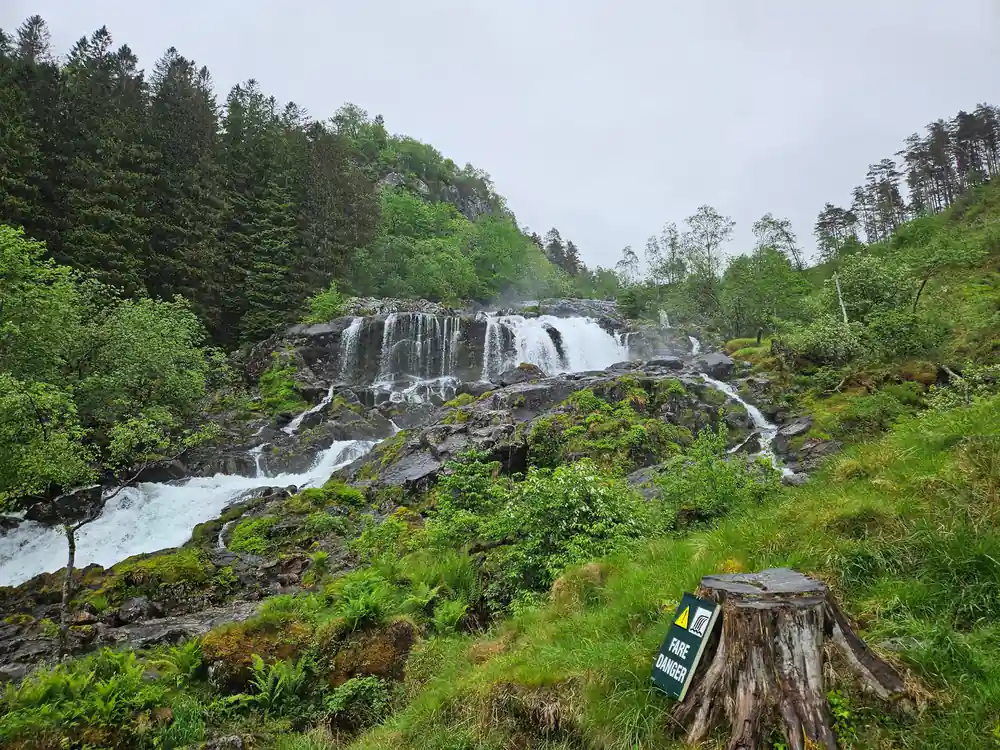
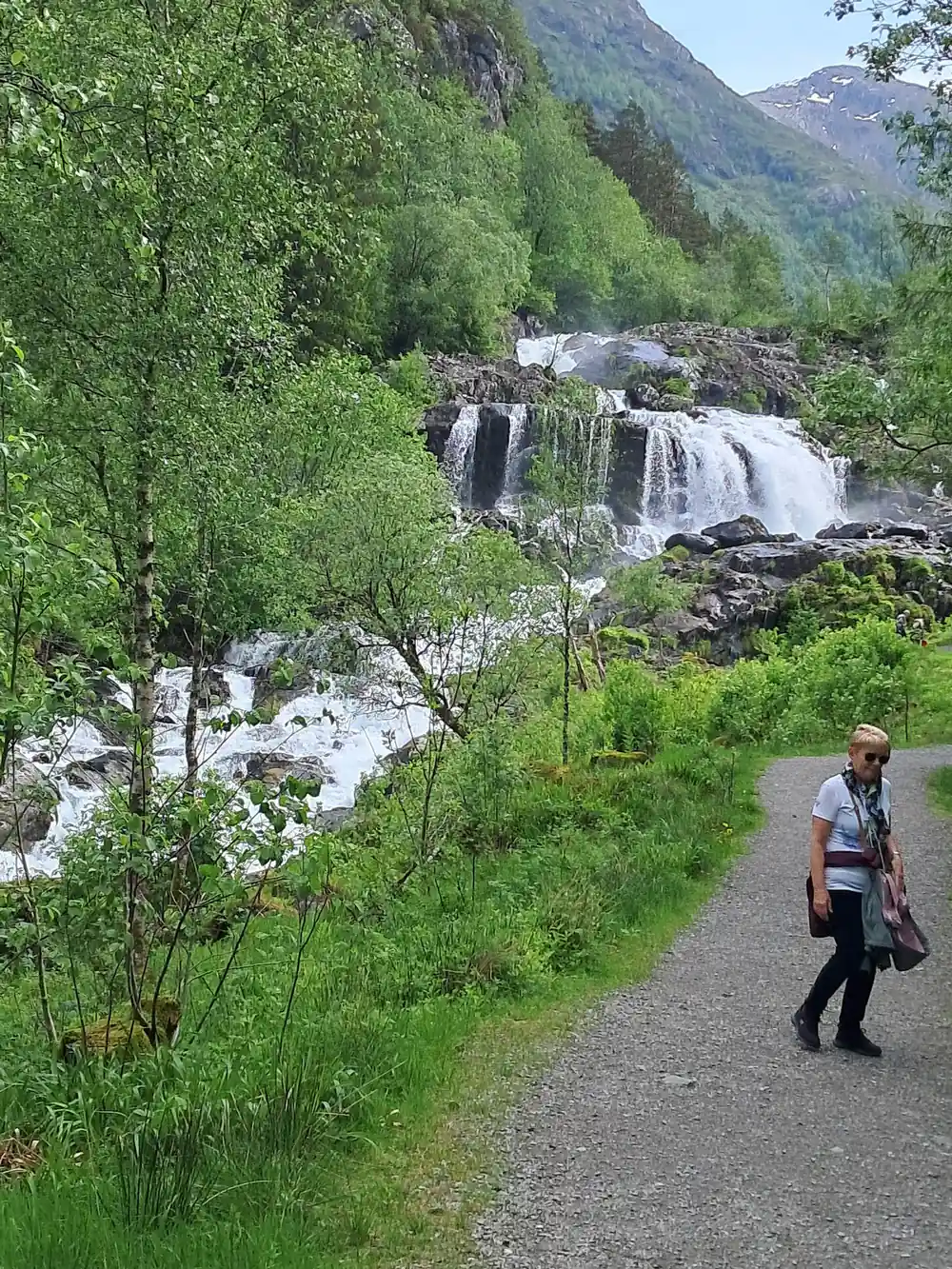
- Signed from the village, and sitting directly on the route up to the Hattebergfossen waterfall.
- The Manor House entrance appears on the tour's exclusion list and is arranged on the day.
- Gravel avenues under old trees and formal beds, walkable without going into the building.
- Because it is on the way, the manor and the falls fit together as one loop rather than two trips.
What it is
A manor house on the flat ground between Rosendal village and the mountains, with formal gardens, parkland and woodland around it. The tour record vouches for it by name: the entrance to the Manor House sits on the exclusion list, which is how a boat ticket tells you a building exists.
The village signpost puts it at 1.3 kilometres from the quay, which is twenty minutes of level walking. It is the closest of the three main things to do in Rosendal and the easiest to fit around anything else.
Guests mention it constantly and usually alongside the waterfall, because the two sit on the same route. Several describe the manor and the falls together as the afternoon, which is exactly how the geography wants you to do it.
Rosendal Baroniet: the gateway and the gardens
The thing everybody photographs is the gateway: a carved stone arch set into a white wall, with an iron gate and a crest above it. It is the sort of ornamental stonework you would expect on a grand European estate and rather less expect at the head of a Norwegian fjord.
Behind and around it are formal gardens, with beds cut into lawn and paths running between them. It is small by the standards of a stately garden and immaculate by any standard.
The wider grounds are the part people underestimate. Gravel avenues run under mature trees across open parkland, and woodland paths with plank bridges take you out towards the river. On a warm afternoon that parkland is a very pleasant place to be doing nothing at all.
Going inside, and whether to
Entry is not included in your boat ticket. That is stated on the exclusion list and it means an admission arranged at the door on the day, on the manor's own opening hours rather than the boat's.
Whether it is worth it depends on what you like. If old interiors and the history of a place interest you, this is the only building of its kind you will see on this trip and it is the reason the village is known.
If they do not, the grounds are the better part anyway and you can walk them without going in. Plenty of guests do exactly that and describe the gardens rather than the rooms.
The carved stone gateway into the courtyard at Baroniet Rosendal
The cafe, and ending the walk here
There is somewhere to eat on the site, and guests describe finishing the waterfall walk with a meal before heading back down to the quay. That is a good shape for an afternoon and it removes the question of where to eat in a village this size.
The order that works is up to the falls first, back through the grounds second, cafe third, quay fourth. It puts the fixed-distance walking at the start when you have most time in hand.
It also means you are moving downhill and towards the boat for the whole second half of the afternoon, which is the right direction to be facing when a departure time is approaching.
Rosendal cruise: fitting the manor into 3.5 hours
Easily, and in almost any combination you like. Twenty minutes each way plus as long as you care to spend in the middle makes the manor the most forgiving thing to do with an afternoon in Rosendal.
With the waterfall it is a two hour loop for both, which leaves an hour and a half spare. On its own, with the gardens walked properly and lunch on the site, it is a relaxed two hours and you still have time for the museum at the quay.
The only combination that does not work is the manor plus the Sjethaug climb. That is an afternoon for one or the other, and the climb is the one that decides.
What is around it
Kvinnherad church is four hundred metres from the quay and worth the small detour on the way. It is a white stone church with a slate roof in its own graveyard, medieval in origin, and it is the oldest thing in the district.
Steinparken, the geological park, is signed at one kilometre. It is an open air collection of the rock types of the area, which sounds dry and turns out to be a pleasant piece of parkland with very large stones in it.
All of which is the point about Rosendal. It is a small village where four separate things worth seeing sit within twenty minutes of each other, which is why three and a half hours is enough.
In poor weather
The grounds hold up better than a hill path does, being gravel and grass rather than loose stone, and trees give you some shelter. A wet walk round the parkland is perfectly pleasant in a jacket.
The house and the cafe are both indoors, which makes the manor the middle option between a soaking on the Sjethaug path and giving up on walking entirely in favour of the museum down at the quay.
And the gardens in rain are genuinely good rather than merely tolerable. Norwegian planting is built for this climate, and everything in them is greener and heavier and better for the water falling on it.
Book the boat and walk up
from US$93Reserve now & pay later