The main points
- The centre stands directly where the boat lands, so it takes no walking time out of your afternoon.
- The Folgefonn Centre appears on the exclusion list, so admission is arranged on the day.
- When the cloud is down and the paths are unappealing, this is the indoor option and a good one.
- Guests describe rich material on local geology, flora and fauna as well as on the ice itself.
What the centre is
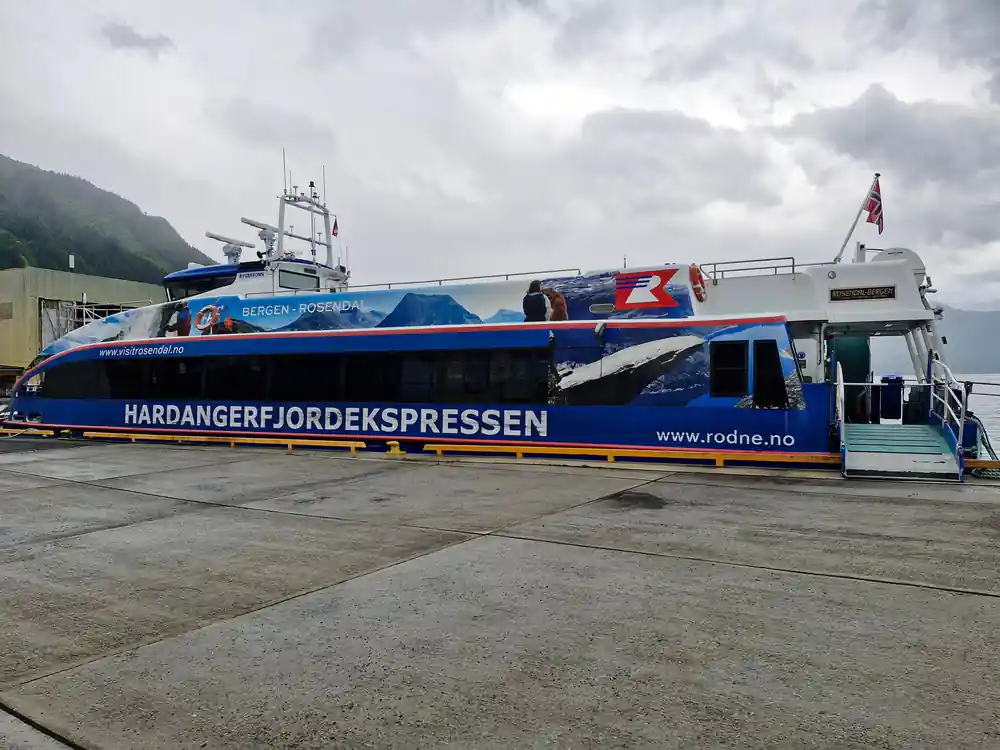
A visitor centre about the Folgefonna glacier, the Hardangerfjord and the way of life around them, standing directly at the Rosendal quay. The tour description names it and places it there, and the boat lands you effectively at its door.
That location is its practical advantage. Everything else in Rosendal takes twenty minutes to half an hour of walking in each direction. This takes only the time you spend inside it.
Guests describe it as a small museum with a good deal more in it than they expected, and several report staying considerably longer than they had planned to when they walked through the door.
What is actually in it
Local geology, which in this landscape means the story of how ice cut a fjord out of rock. Flora and fauna, which means what grows and lives on a coast where sea level pasture sits under a permanent ice cap.
And the glacier itself: what Folgefonna is, how big it is, how it behaves and what it has done to the country around it. One guest describes rich information on all of this and calls the museum a highlight of the day.
It is the kind of place that answers the questions the boat trip raises. You spend two hours looking at a landscape from the water without being told anything about it, and then you find the explanation waiting at the quay.
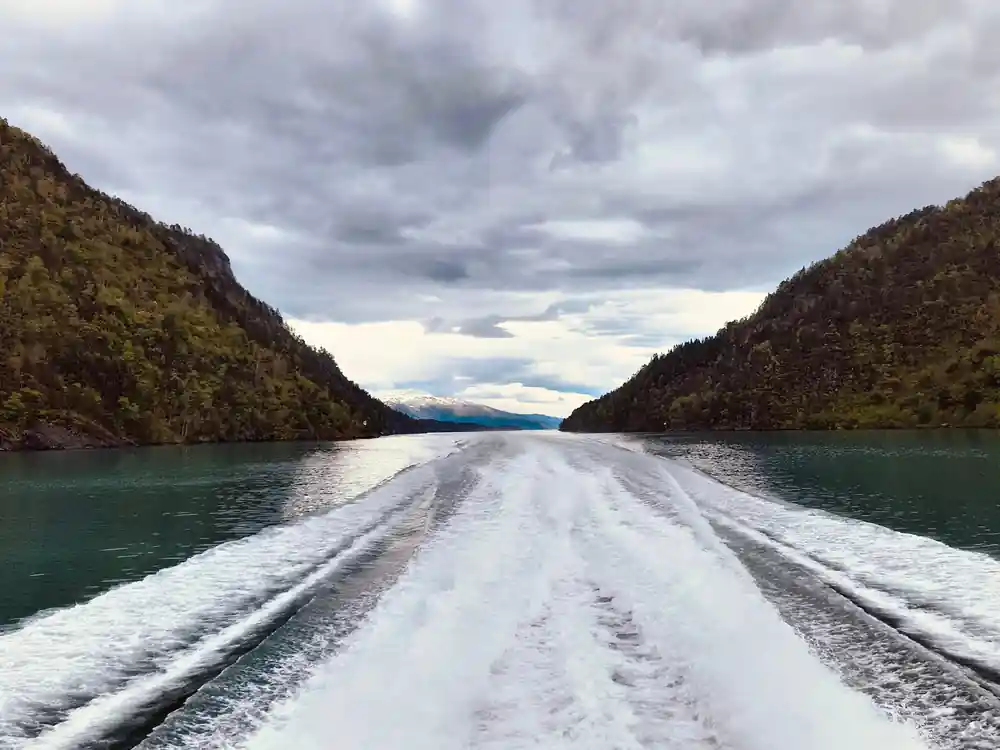
Cloud and snow on the high ground above the Hardangerfjord, where the Folgefonna ice sits
Hardanger glacier: what Folgefonna is
A plateau glacier lying on the high ground of the Folgefonna peninsula, between the Hardangerfjord and the sea. It is among the largest ice caps in mainland Norway and it sits above the fjord you have just sailed down.
Plateau glaciers behave differently from the valley glaciers most people picture. Rather than a tongue of ice grinding down a valley, this is a sheet lying across high ground, feeding meltwater down every side into the fjords below.
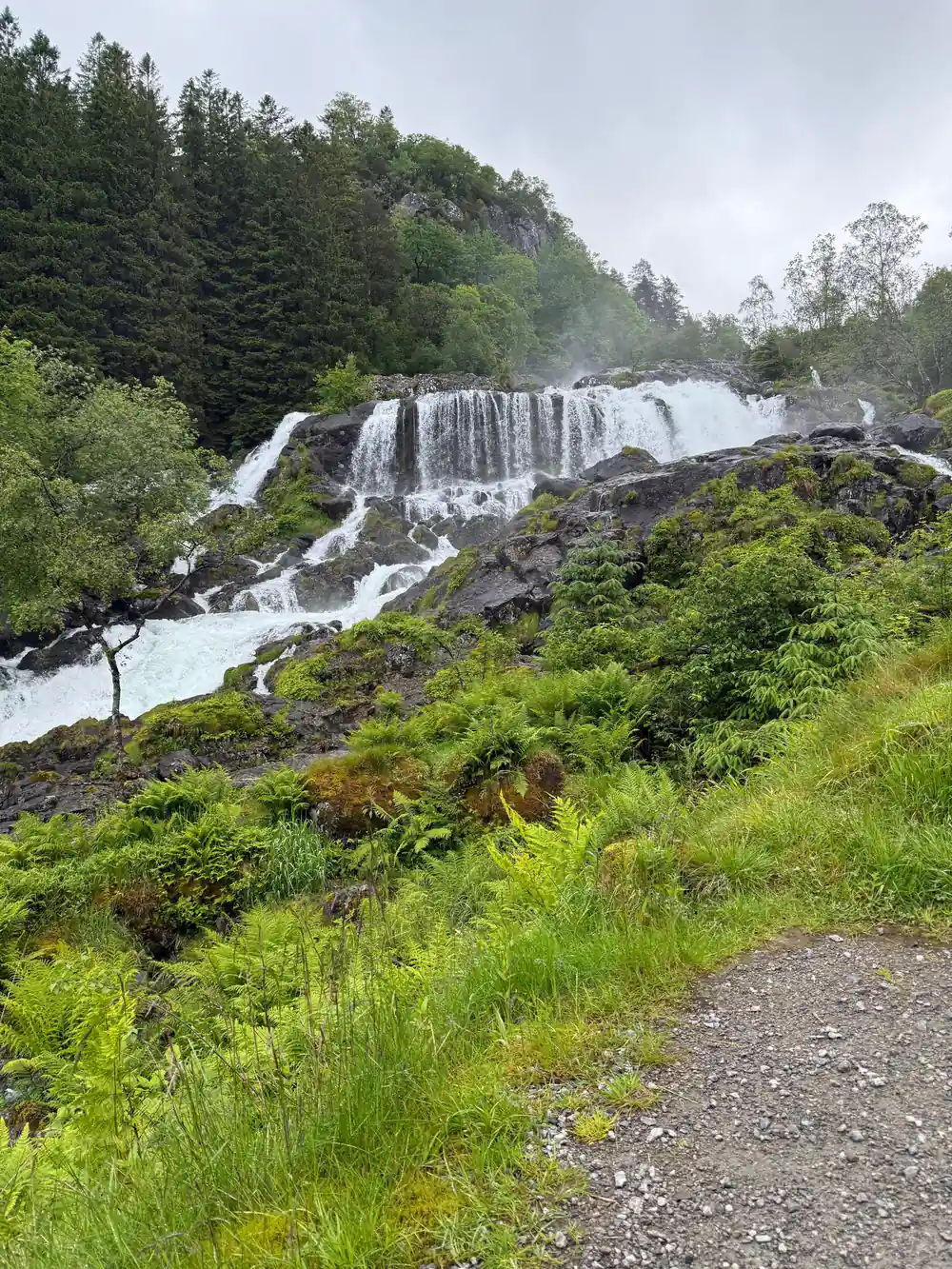
That meltwater is why the waterfalls around Rosendal run the way they do, and why the rivers are the colour they are. The glacier is not a separate attraction from the landscape; it is the thing that made it and keeps making it. A Hardangerfjord Norway cruise puts you past the edge of that ice for two hours without ever quite showing it to you. As an ice cap the Hardanger glacier Norway keeps up here is among the largest anywhere on the mainland.
Can you see it from the boat
In parts, and mostly as snow on high ground rather than as an obvious sheet of ice. On a clear day the tops above the fjord carry white well into summer, and that is the edge of the same system.
Cloud sits on those tops a great deal of the time, which is the honest position. Western Norway is a wet coast, and the high ground is where the cloud gathers.
This is part of why the centre earns its place at the quay. On the many days when you cannot actually see the glacier at all, it is the thing that tells you what is sitting up there behind the cloud.
3.5h
The time ashore. The centre is the only attraction in Rosendal that takes no walking at all, which makes it the flexible one.
Hardangerfjord Norway cruise, and fitting the centre in
It is the most flexible thing in Rosendal because it is the only one with no walking attached. That makes it the natural companion to whatever else you do rather than a competitor for the time.
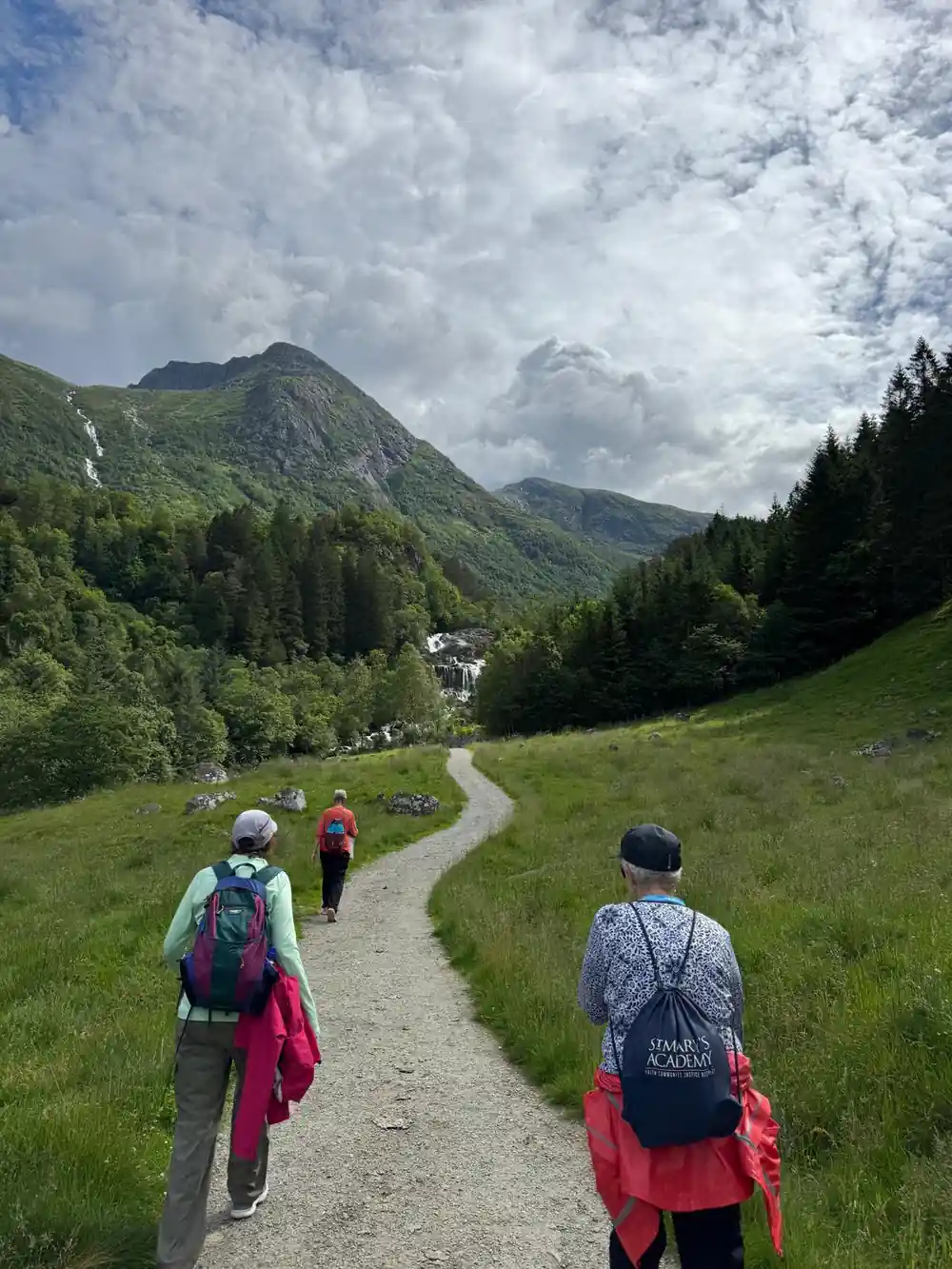
The common pattern is the waterfall walk first, then the centre in the last hour before the boat, since it sits where you need to be anyway. That works well and means the walk is done while you are fresh.
The other pattern is the weather one. If the cloud is down and the rain is horizontal, spending most of the afternoon here rather than on a hill is not a defeat. It is the sensible reading of a Norwegian sky.
Entry, and what is not covered
Entry to the Folgefonn Centre is on the tour's exclusion list, alongside entry to the Manor House. Your boat ticket carries you both ways and gives you the afternoon; what you go into while you are there is separate.
That is a normal arrangement for a transport-based day trip and the operator states it plainly rather than burying it in a footnote. Admission is arranged at the door on the day you are there.
Opening hours are the operator's rather than the boat's, and they vary with the season as everything in rural Norway does. In high summer this is not a concern; in the shoulder months it is worth a glance at the centre's own information before you commit your afternoon to it.
Who gets the most from it
People who want to understand what they are looking at. A fjord is a spectacular thing to sail down and a more interesting one when you know it was cut by ice that is still sitting up there.
Families, on the evidence of the reviews. It is indoor, it is a manageable size, and it holds the attention of people who have already done two hours on a boat.
And anybody whose walking plans have collapsed. Bad weather, tired legs or a late landing all point at the same building, and it is a good deal better than standing at the quay for two hours.
Book a day on the Hardangerfjord
from US$93Reserve now & pay later