The main points
- Four of the seven hours are spent on the water, which makes the boat as much of the trip as the village is.
- Heated cabin, spacious viewing decks and seats that face the windows rather than each other.
- This is a scheduled fjord express calling at points along the route, not a sightseeing loop.
- Snacks and hot and cold drinks are sold aboard, though they are not part of the ticket.
Four of the seven hours
Two hours down and two hours back, which means the boat is not the transport to the trip. It is more than half of it. Anybody booking this expecting a quick hop to a village has the proportions wrong.
That is a good thing rather than a warning. The Hardangerfjord is one of the great pieces of Norwegian water and you spend four hours moving through it, in a warm seat, with nothing required of you.
Guests say this repeatedly and in several languages. The two hours pass quickly because the view from the seat never stops changing, which is exactly what you want from a long crossing. Four hours is also long enough that the fjord changes character while you watch, which a shorter crossing never quite manages.
Hardangerfjord boat cruise: the vessel
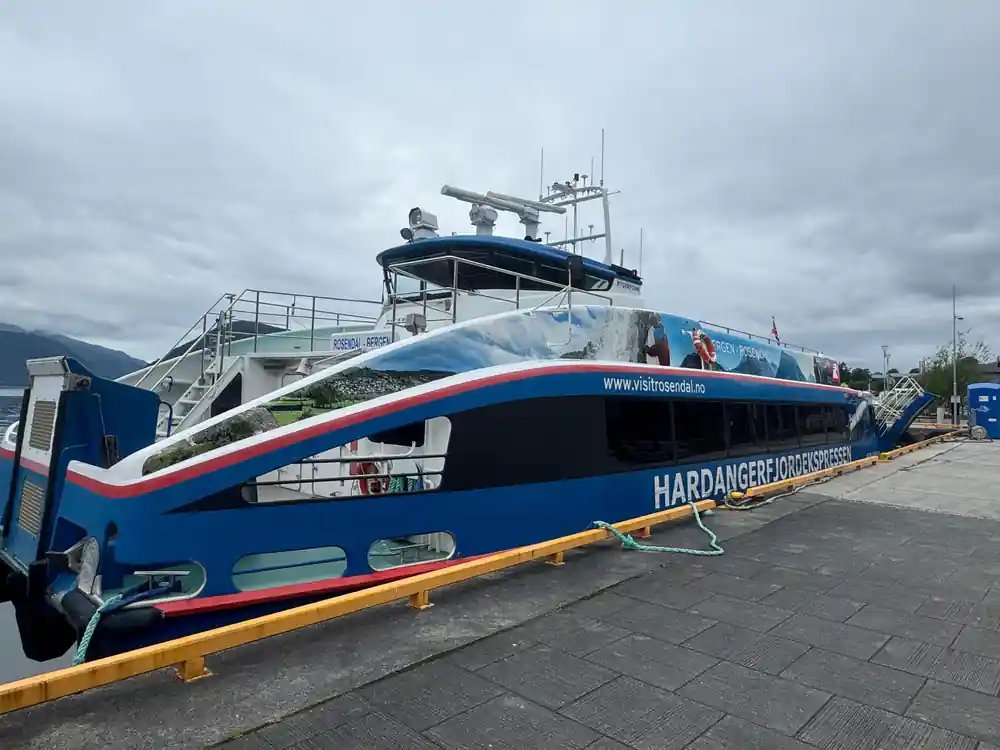
A modern catamaran run by Rødne, branded Hardangerfjordekspressen along the hull. It has an enclosed heated cabin and open viewing decks, which is the correct arrangement for a coast that can produce four seasons in an afternoon.
Inside, the seating faces the windows. That sounds obvious and a surprising number of vessels get it wrong, seating people in facing pairs so that half the passengers spend the trip looking at the back of somebody's head.
Guests describe it as comfortable and impeccably clean, with several singling out the seats. This is a boat built for people who are going to sit in it for two hours at a stretch, twice.
Being on deck
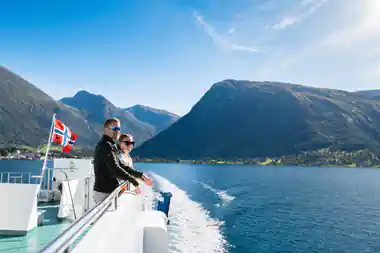
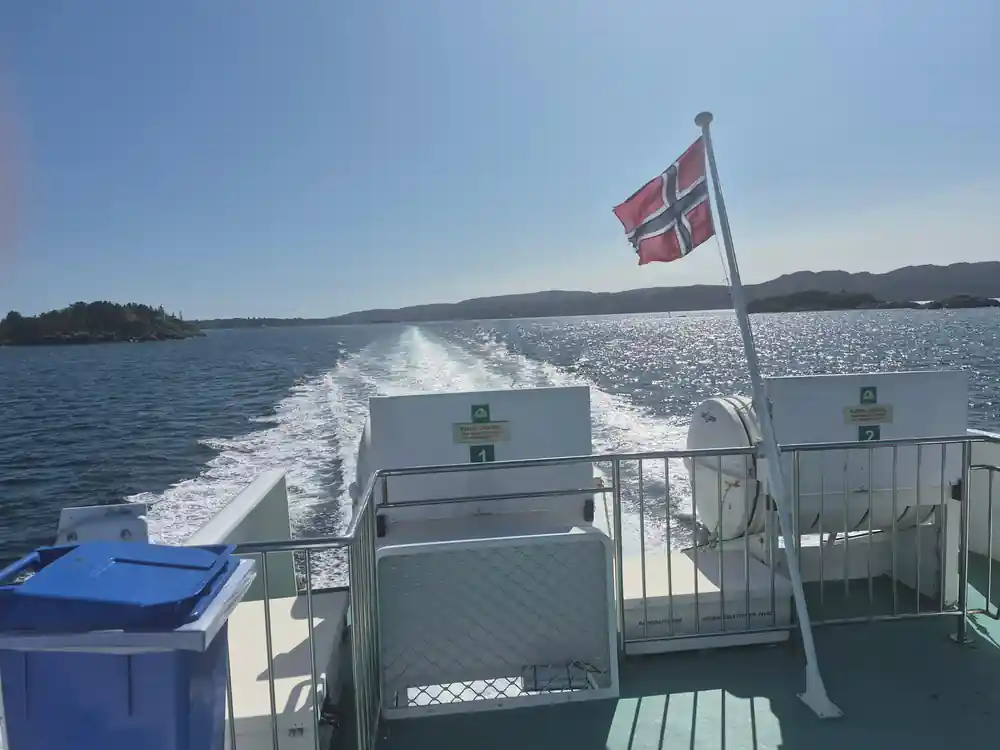
The decks are where the trip actually happens on a decent day. The catamaran carries a Norwegian flag at the stern and the wake runs back down the fjord behind it, which is the photograph everybody takes.
It is windier than the temperature suggests, because a boat at speed makes its own weather. A jacket that stops wind matters more than a warm one, and the cabin is right there when you have had enough.
The best practice is to alternate. Twenty minutes outside when something is happening, back in to warm up, out again when the fjord narrows. Nothing about the boat discourages this. Most people spend more of the outbound leg outside and more of the return inside, which is about right for a day that starts fresh and ends tired.
What passes the window
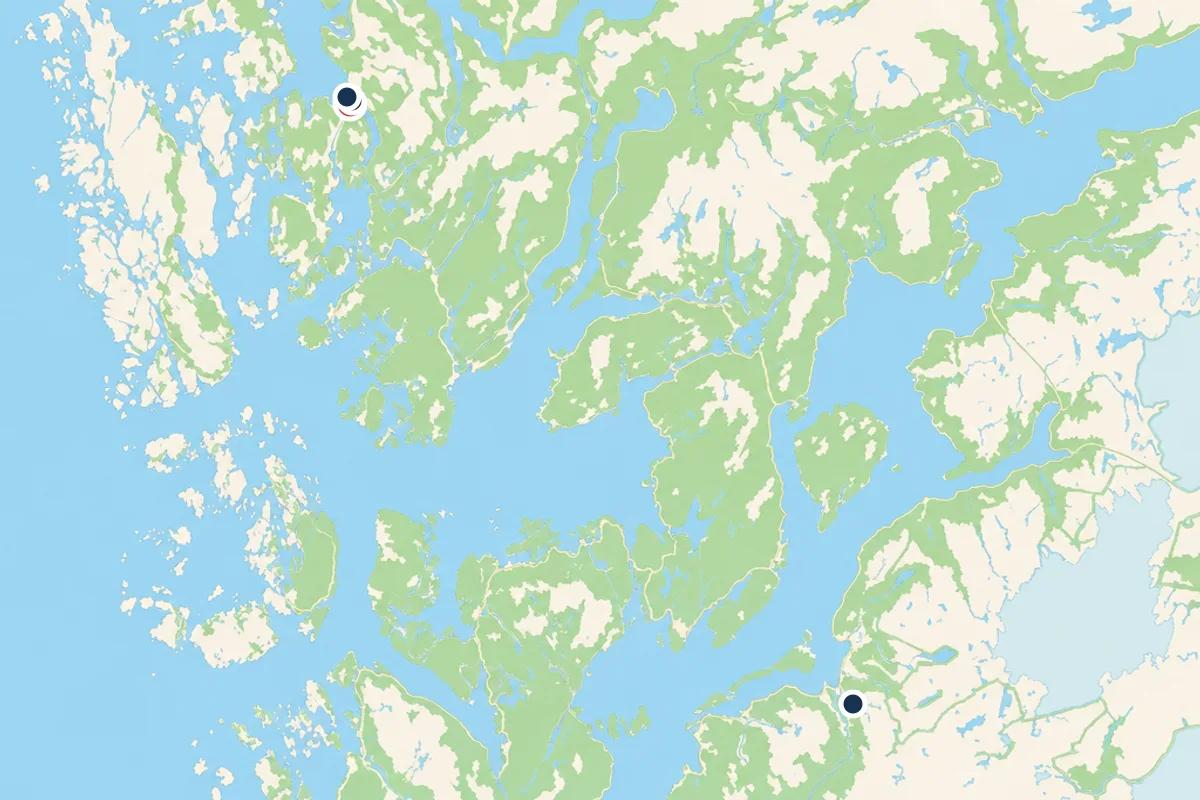
Bergen first. Bryggen, the row of wooden Hanseatic warehouses on the old wharf and a UNESCO World Heritage site, is the first thing on the water, and Håkon's Hall stands on the same waterfront behind it.
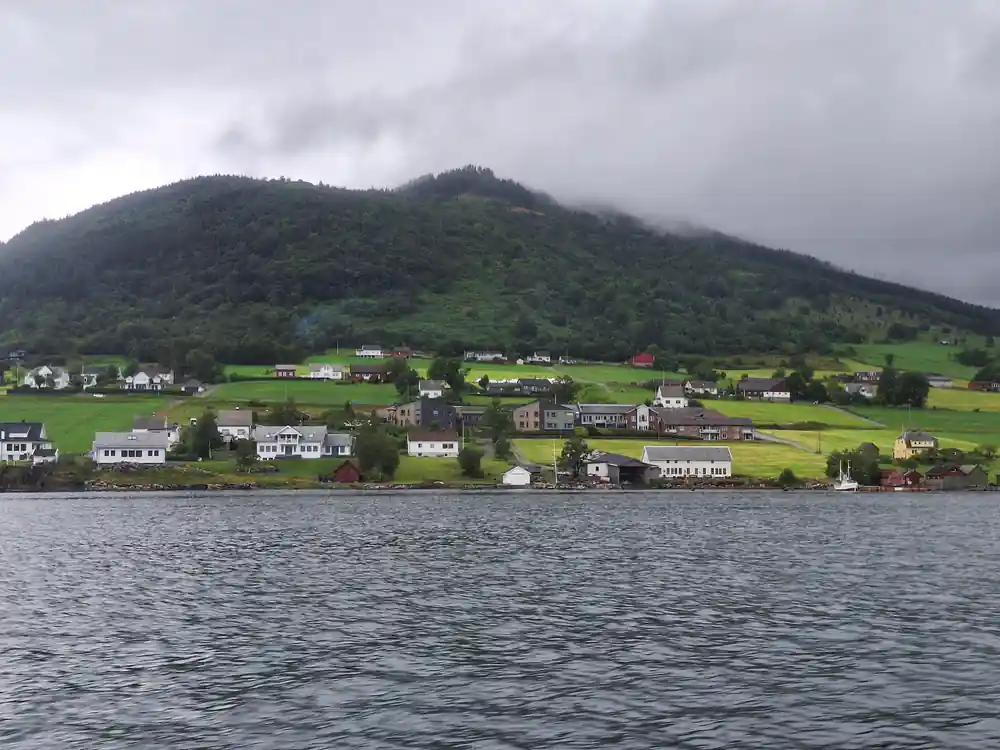
After the city, ordinary coastal Norway. Red boathouses along the shore, farms on slopes that look impossible to work, navigation beacons standing in green water, small quays with a ferry ramp and nothing else.
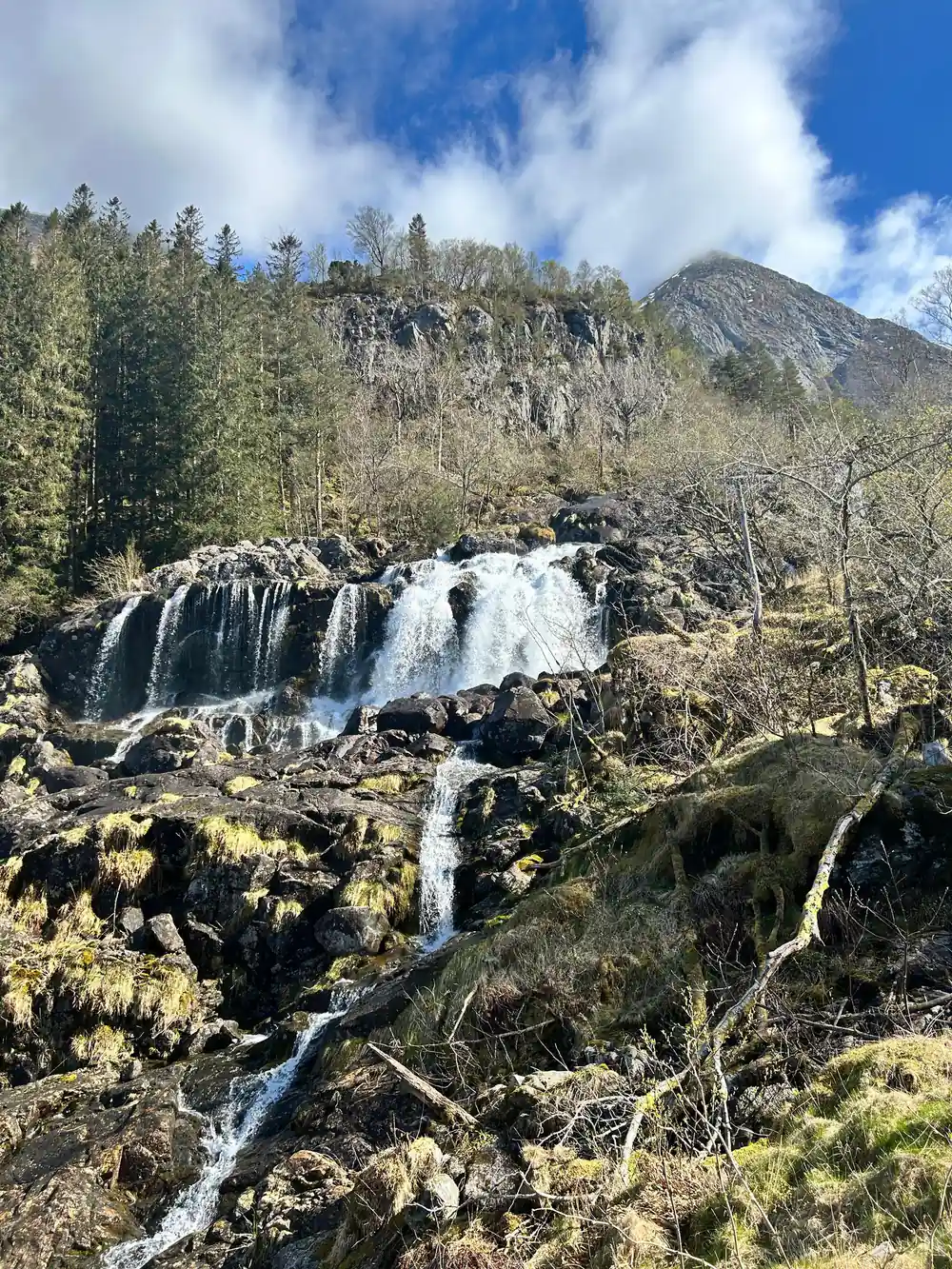
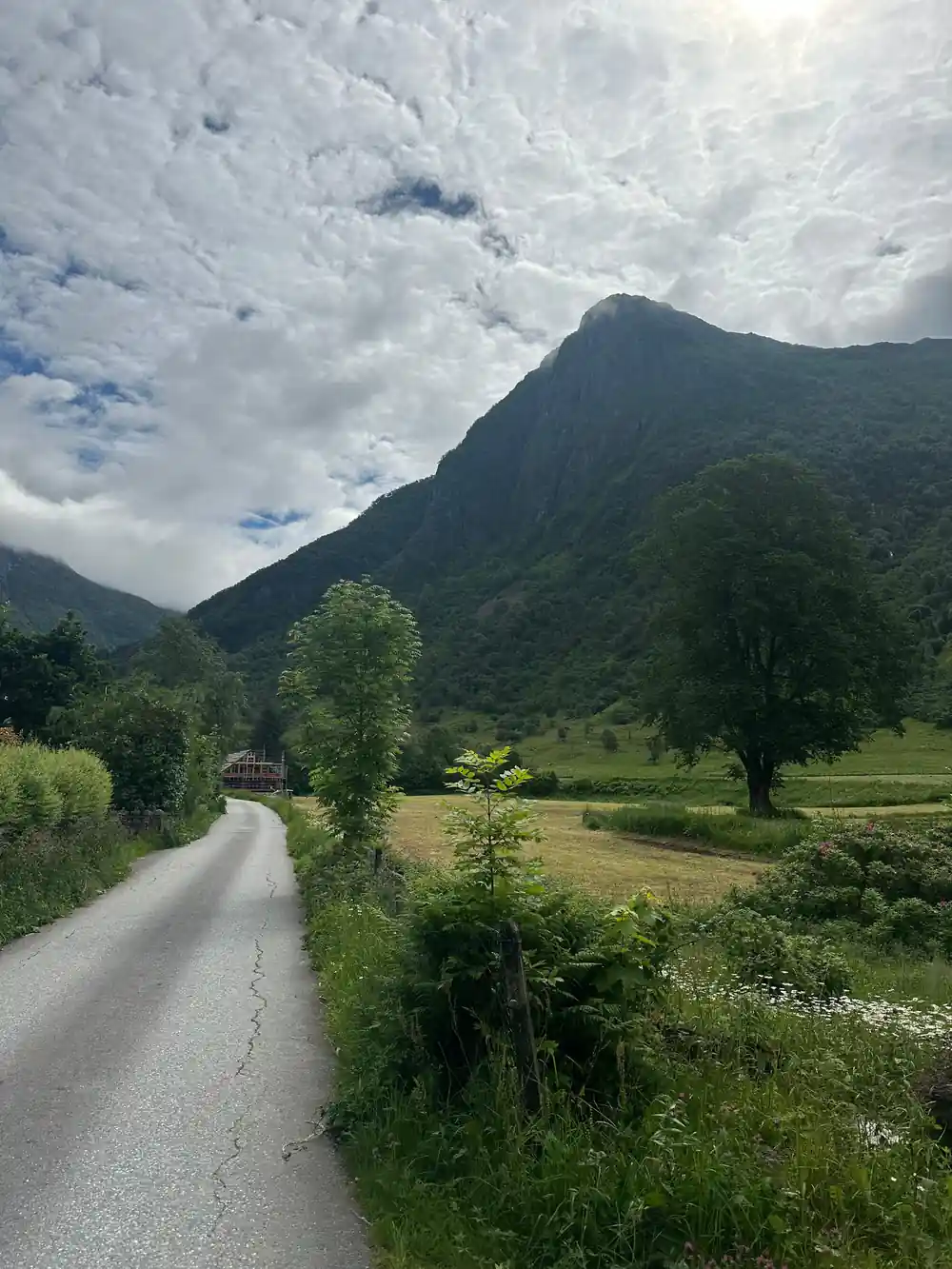
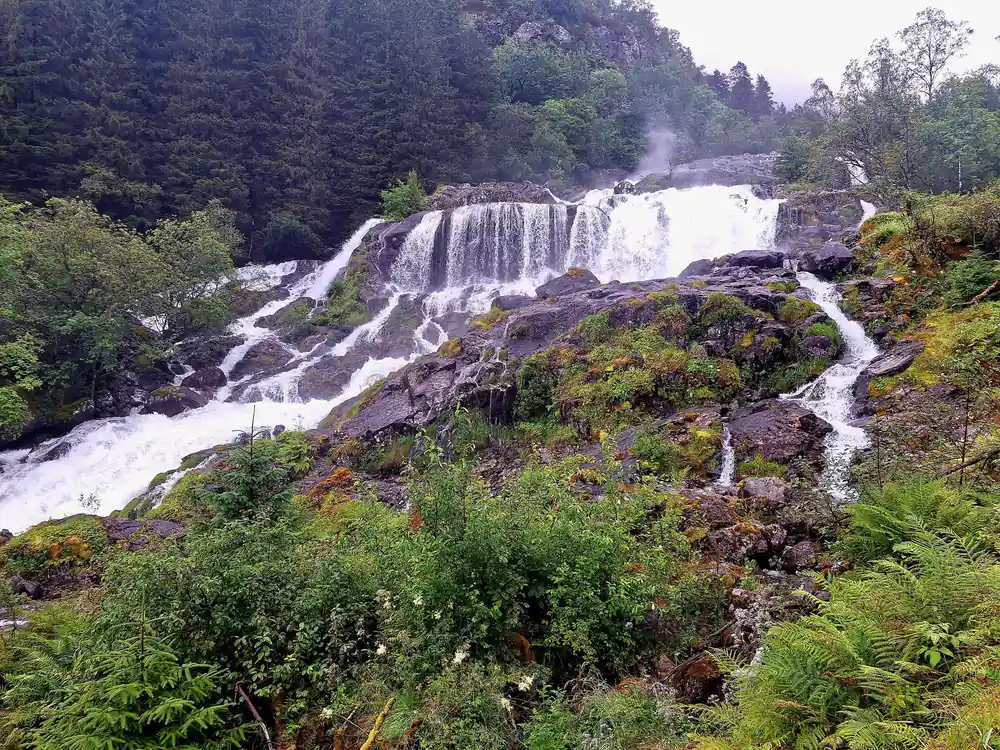
Then the fjord proper: long reaches of open water between walls that get steadier and higher, waterfalls streaking dark rock, cloud sitting halfway down the mountainsides. In the last half hour before Rosendal it becomes genuinely dramatic.
Hardangerfjord scenic cruise, or a working ferry
Both, and it is worth understanding which. This is a scheduled express service that carries locals as well as visitors, calling at points along the route as required rather than running a tourist loop.
One guest describes it accurately: an express ferry that stops at some stations as needed, without a guide and without commentary. That is the honest description of what you are boarding.
The upside is that you see the fjord the way people who live on it do. The downside is that nobody tells you what you are looking at, which is a genuine trade and the reason the guiding exclusion matters. It also means the timetable is built for people who need to get somewhere rather than for a scenic itinerary, which is why the departure times are what they are.
Food and drink aboard
There is a kiosk selling snacks and hot and cold drinks. It is listed among the exclusions, meaning it is available to purchase rather than included, and it is open on both legs.
Expectations should be modest and guests report them being exceeded. One singles out the food as surprisingly good and specifically praises a wrap, noting that this is not what a ferry usually manages.
Four hours on the water with a coffee available at both ends of the day is a considerable comfort, particularly on the return leg when everybody is tired and slightly damp.
Which side to sit
It matters less than on a narrow fjord run, because the Hardangerfjord is wide for much of the route and the boat turns through enough angles that both sides get a share.
If you want a rule: the view is generally better on the starboard side outbound, which puts the mainland shore and its farms closer. Coming back, that becomes the port side.
The better rule is to not treat your seat as fixed. Leave a jacket on it, walk about, use the decks, and come back when you want to sit. Nobody on a Norwegian ferry minds. A four hour day on the water is long enough that being comfortable matters more than being in the theoretically optimal seat for any given ten minutes.
Book a seat on the express
from US$93Reserve now & pay later
Common questions
How long is each boat leg?
What is the boat like?
Is there commentary?
Can I go outside?
Is food available on board?
What do you see on the way?
Which side should I sit on?
On board
- Heated cabin with window seating
- Open viewing decks fore and aft
- Kiosk selling snacks and drinks
Fast facts
- Each way2 hours
- VesselModern catamaran
- GuidingNot included
- KioskTo purchase